P1 · Just went independent
Quarterly Estimated Taxes Without the Panic
Use 2026 Form 1040-ES logic for estimated taxes: the $1,000 screen, 90% current-year test, prior-year safe harbor, irregular-income forecasting, and tax reserves.
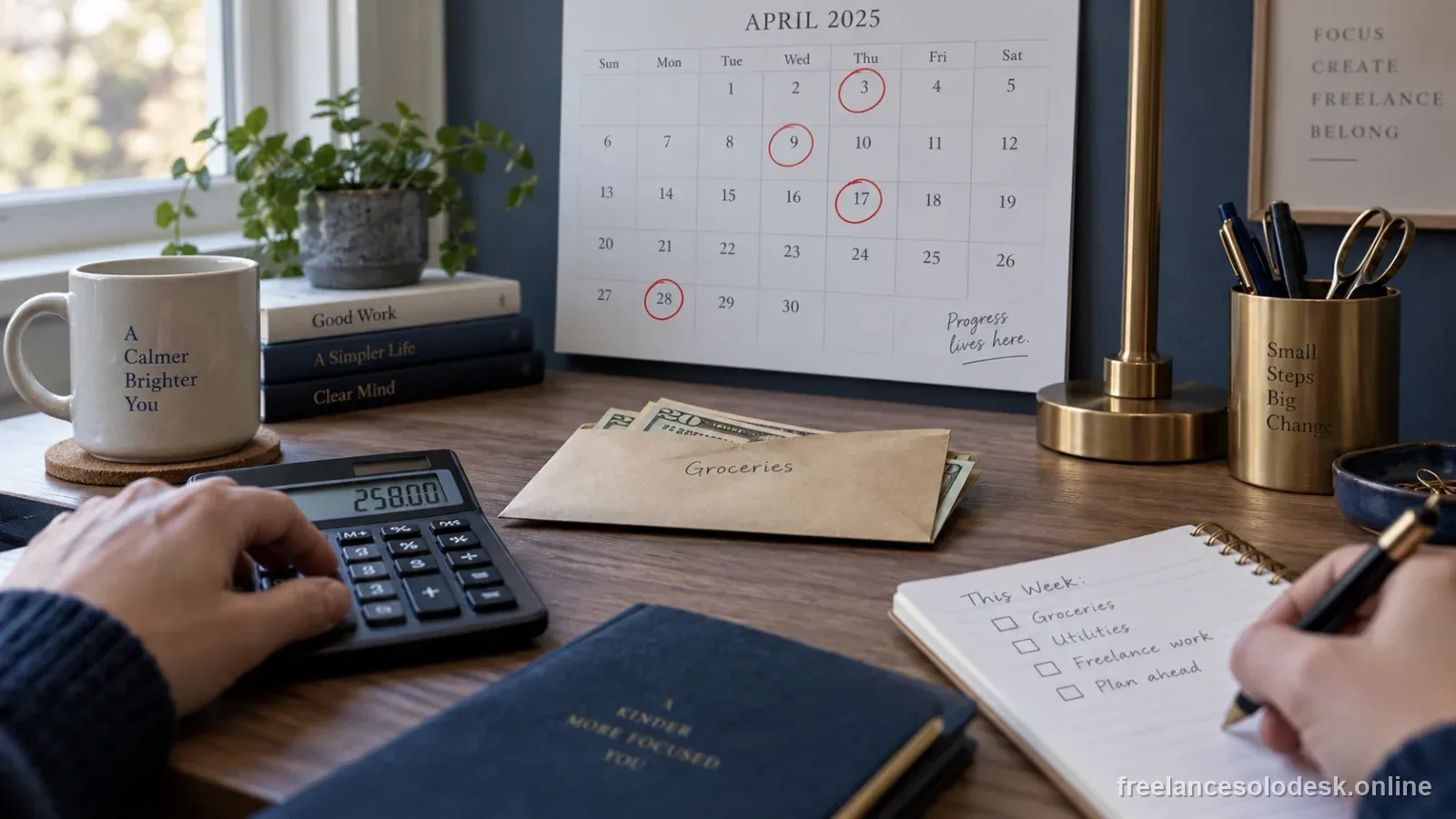
Estimated tax is a pay-as-you-go system. The federal question is not simply whether you are self-employed, but whether you expect to owe enough after withholding and refundable credits to trigger the estimated-payment rules. IRS guidance generally looks to a $1,000 expected balance-due threshold and compares current-year payments with 90% of current-year tax or 100% of prior-year tax, with a 110% prior-year rule for certain higher-income taxpayers.
Start with the $1,000 screen, then compare safe harbors
Estimated tax is a pay-as-you-go calculation, not a rule that every freelancer must send the IRS the same percentage of every invoice. For individuals, the first federal screen is generally whether you expect to owe at least $1,000 after withholding and refundable credits.
The 2026 safe-harbor framework then compares what you pay during the year with current-year tax and prior-year tax; higher-income taxpayers can face the 110% prior-year test described in IRS guidance. Use Form 1040-ES or tax software with your actual prior-year return, expected net business profit, spouse income, withholding, credits, and other income. A social-media 'set aside 30%' rule may be a cash habit, but it is not the penalty calculation.
Quarterly tax projection board
Safe harbor manages penalty risk; it does not predict final tax
Treat safe-harbor math as a penalty-management tool, not a prediction of final tax. A person whose income jumps sharply can satisfy a prior-year safe harbor and still owe a large balance in April.
Use the current Form 1040-ES calendar and worksheets
Form 1040-ES provides the current worksheets and due dates. Because dates can shift for weekends, holidays, disasters, or law changes, link the current IRS form rather than hard-coding a calendar copied from an old article.
Turn irregular client payments into a tax reserve
A practical system is to reserve part of each client payment in a separate tax account, then reconcile that reserve against a real projection at least quarterly instead of blindly applying one percentage forever.
W-2 withholding can be another payment lever
If you also have W-2 wages, increasing payroll withholding can sometimes cover tax generated by freelance income. Withholding has different timing treatment from a late estimated payment, so ask a tax professional whether that lever fits your return.
A lumpy-quarter tax reserve example
Reserve example: a solo operator receives $15,000 in gross payments during a quarter and has $4,000 of deductible business costs. She does not multiply $15,000 by a random social-media percentage. She updates projected annual net profit, withholding, credits, and prior-year tax, then uses Form 1040-ES or her tax software to decide the payment.
How irregular income changes the payment plan
Irregular income makes the annualized method and withholding strategy worth understanding. If you also receive W-2 wages, increasing payroll withholding can sometimes be simpler than sending separate estimates, because withholding has different timing treatment for underpayment-penalty purposes. If income arrives unevenly, do not assume four identical checks are always the only reasonable method; IRS Publication 505 explains the annualized-income approach. Operationally, keep a separate tax-savings account and update the estimate after a large new contract, a major deductible expense, a spouse job change, or a change in withholding. The reserve protects the cash. The 1040-ES or tax-software calculation determines how much should actually be paid.
Turn estimated tax into a four-line forecast that you refresh rather than a percentage you guess once in January. Begin with expected Schedule C net profit, then add or subtract other household income, deductions, credits, and withholding that affect the return. Use the current Form 1040-ES worksheet or tax software to estimate total tax and compare the required-payment alternatives. The widely cited safe-harbor figures are conditions in the federal underpayment rules, not a promise that the resulting payments equal the final tax bill. Higher-income prior-year returns can trigger the 110% prior-year benchmark, and special rules can apply to farmers, fishers, and other situations. Record which safe harbor you used and the prior-year AGI number that supports it. If your spouse has wages or you keep a part-time job, model additional withholding too; withholding can be a practical way to cover a late-year increase because of how it is credited across the year for penalty purposes.
For uneven freelance income, make the cash system follow the tax math without pretending the two are identical. Each time a client pays, move a conservative reserve percentage into a tax account so ordinary spending cannot consume it. At the end of each month, update year-to-date profit and the annual forecast. A $30,000 project in November can change the estimate dramatically; a $12,000 equipment purchase or a lost contract can move it the other way. If income is heavily seasonal, review the annualized-income installment method in Publication 505 or ask a preparer whether it fits, rather than forcing four equal economic quarters onto a business that earns most revenue in one season. Keep proof of each federal and state payment with the tax records. State estimated-tax systems do not necessarily mirror the federal thresholds or dates, so create a separate state line instead of copying the IRS result. The operating habit is simple: reserve continuously, calculate periodically, and verify before each payment.
Before each estimated-tax payment window
- Open a dedicated tax savings account.
- Keep year-to-date profit current before each payment window.
- Compare current-year projection with the prior-year safe harbor.
- Check state estimated-tax rules separately.
- Reforecast after a major new client, loss of a client, or W-2 change.
Estimated-tax questions for uneven income
When do federal estimated-tax payments generally apply?
For 2026, the usual starting screen is whether you expect to owe at least $1,000 after withholding and refundable credits and whether those prepayments fall below the applicable required-payment comparison. Use Form 1040-ES because special rules and household facts can change the result.
What is the 90% / 100% / 110% safe-harbor idea?
The general framework compares current-year payments with 90% of current-year tax or 100% of prior-year tax; certain higher-income taxpayers use 110% of prior-year tax. Your prior return, filing status, income, withholding, and special rules matter, so calculate from the current IRS worksheet rather than a slogan.
Should I just save 30% of every client payment?
A fixed reserve percentage can be a useful cash-management habit, but it is not the federal penalty calculation. Reforecast expected net profit, other household income, credits, and withholding after large revenue or expense changes, then adjust the amount actually paid through the current-year worksheet or tax software.
Can extra W-2 withholding cover tax from freelance income?
Often it can help. Payroll withholding has timing treatment that can make it useful for someone who also has wages, but whether it is sufficient depends on the whole return. Compare the projected liability with actual withholding and estimates rather than assuming the side-business tax is handled automatically.
What if freelance income arrives unevenly instead of four equal quarters?
Uneven income can make a simple four-equal-payment plan misleading. IRS Form 2210 includes an annualized income installment method that may be relevant when income is concentrated in particular periods. Keep dated income and deduction records, review the current instructions, and use a CPA or EA when the annualized calculation is material or complicated.
Can wage withholding reduce the estimated-tax amount I need to send separately?
Federal income-tax withholding from wages generally counts toward the year's payments, so a freelancer who also has W-2 wages may be able to adjust withholding rather than relying only on quarterly vouchers. Model the whole household tax picture with current Form 1040-ES guidance instead of calculating freelance estimates in isolation from existing withholding.