P1 · Just went independent
The Home Office Deduction, Done Correctly
Compare the home-office simplified and regular methods after qualification, including the $5-per-square-foot option, allocation records, and depreciation effects.
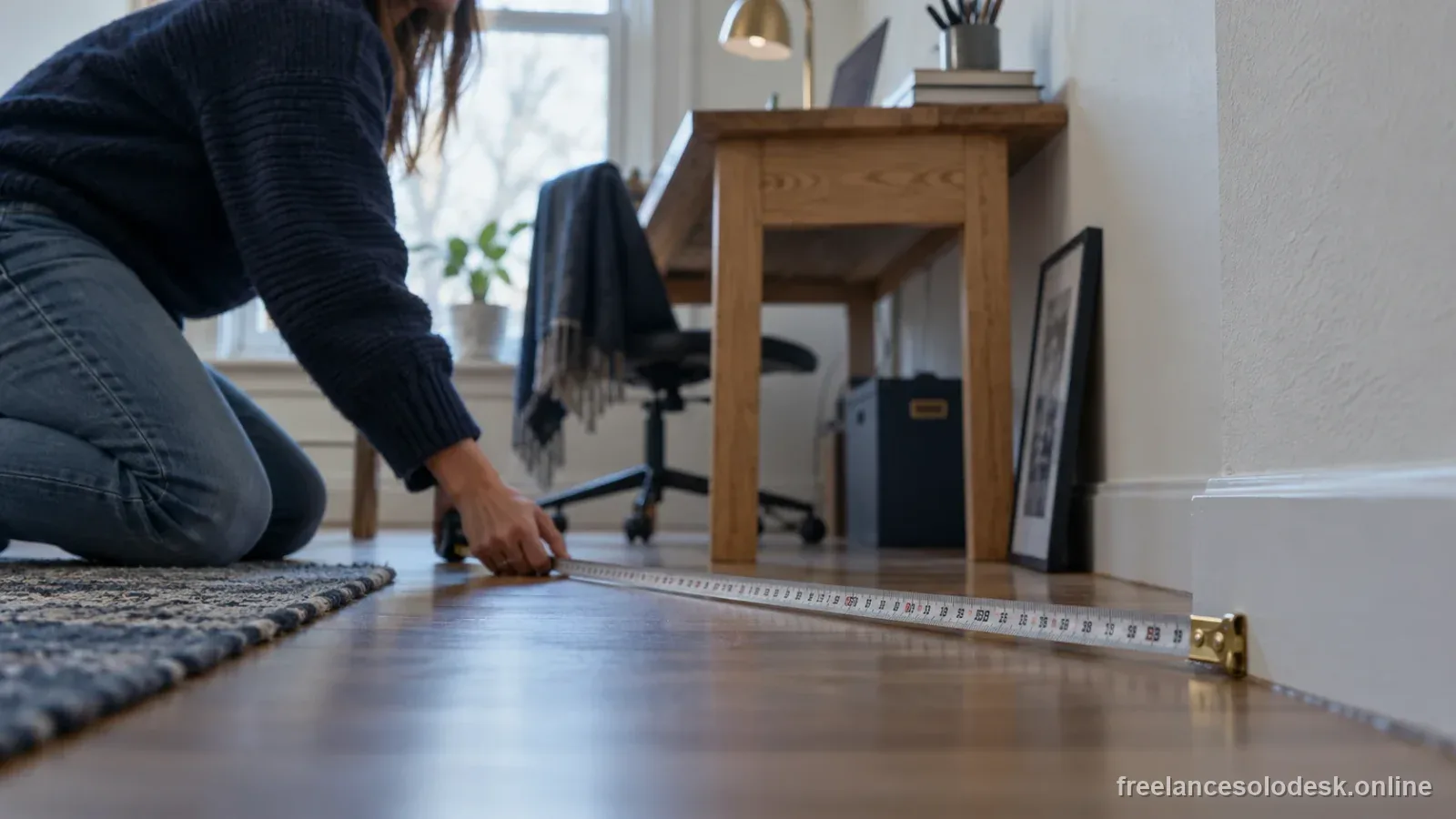
The home-office deduction starts with qualification, not square footage. For most self-employed people, the space must be used regularly and exclusively for business and satisfy the principal-place-of-business or another qualifying rule. The simplified option uses $5 per square foot up to 300 square feet, for a maximum simplified calculation of $1,500 when the full area and year qualify. It does not loosen the underlying eligibility test.
Qualification comes before choosing a calculation method
Qualification comes before arithmetic. For most self-employed people, the space must be used regularly and exclusively for business, subject to special rules such as storage or daycare exceptions. A desk in a room that also functions as the family dining area usually creates an exclusive-use problem even if many business hours are spent there.
Keep a dated floor plan, measurements, photos or other evidence showing the work area, and notes about when the space began or stopped qualifying. If the office changes during the year, use the actual period and area rather than assuming the full-year maximum.
A 180-square-foot office under both methods
Method comparison: a qualifying 180-square-foot office produces a $900 simplified amount for a full qualifying year. Under the regular method, the taxpayer would instead calculate the business percentage of eligible actual costs and depreciation. The right comparison is after considering records, limits, and future sale consequences—not just today's headline deduction.
Exclusive use rules out the dining-table shortcut
A dining table used for client work during the day and family dinner at night generally fails an exclusive-use requirement. A dedicated portion of a room can qualify if the facts satisfy the IRS rules; a separate four-wall room is not always required.
Document the work area with measurements and dated evidence
Keep a dated floor plan or measurement note and evidence of business use. Photos can support your file, but a photo of a desk does not prove regular and exclusive use by itself.
Regular method means actual-cost allocation and depreciation records
The regular method allocates eligible direct and indirect home costs and may include depreciation. That can produce a different deduction, but it requires stronger records and can affect basis and depreciation recapture when the home is sold.
Simplified method avoids home depreciation for that year
The simplified method treats depreciation as zero for the qualified home-office calculation, so it avoids that particular basis reduction. That is one reason the 'bigger deduction today' is not the only comparison.
Compare simplified and regular again after the facts change
The simplified option remains $5 per square foot up to 300 square feet, so a full-year 180-square-foot qualifying office starts with a $900 simplified amount. The regular method instead allocates eligible actual home costs and can include depreciation. The simplified method does not claim home depreciation for that year, while the regular method can create later basis and recapture consequences when the home is sold.
The better method depends on actual rent or ownership costs, business percentage, income limits, recordkeeping burden, and future plans. Compare both when the facts allow, especially after moving, changing room size, or adding a second business that uses the same space.
Qualification and depreciation traps to check
Test qualification room by room, not by job title. Sketch the home, mark the exact area claimed, measure square footage, and write how it is used. ‘Regular’ and ‘exclusive’ use are the core concepts for many self-employed taxpayers, with specific exceptions in IRS guidance. A computer on the dining table that the family uses every night is a weak exclusive-use fact; a clearly separated 90-square-foot corner used only for administrative work can be different. Also check the principal-place-of-business rules and whether you meet clients or perform administrative/management activities there when no other fixed location is used for those activities. If you moved, changed rooms, or stopped using the space exclusively during the year, document the dates. The deduction follows qualifying use, not the fact that you own a laptop and sometimes work at home.
Then compare methods with actual numbers. Under the simplified method, the current IRS rate is $5 per qualifying square foot up to 300 square feet, subject to the method’s other limits. Under the regular method, calculate the business-use percentage and apply it to eligible indirect home expenses, plus direct office expenses where allowed; depreciation rules make ownership more complicated than renting. Build a small spreadsheet with the same square footage and business-use period on both sides, then list mortgage interest or rent, property taxes where relevant, utilities, insurance, repairs, and depreciation under the regular-method rules. Do not assume the larger current deduction is automatically better because regular-method depreciation can affect later home-sale tax calculations. Keep the worksheet, floor plan, and bills with the return. If the home or business facts are unusual, have a tax professional review the method before filing.
One more practical check is the income limitation and carryover treatment. The home-office deduction cannot create every kind of loss without limit, and the simplified and regular methods handle disallowed amounts differently. That is another reason to compare methods using the actual return rather than choosing solely from square footage. If the business uses more than one home during the year, or the office moves within the same home, keep separate dates and measurements for each qualifying period. For a renter, save the lease and rent payments; for an owner, preserve the records used for allocable expenses and basis/depreciation work. The stronger file is a contemporaneous one: measurements and use notes made during the year are more credible than reconstructing a room from memory during an audit years later.
Home-office method comparison
| Qualification | Confirm regular and exclusive business use, plus the principal-place-of-business or other qualifying rule that applies. A multipurpose guest room does not become deductible merely because a laptop sits there. |
|---|---|
| Simplified method | For qualifying use, compare the IRS simplified rate of $5 per square foot up to 300 square feet, adjusted when required for part-year or changing use. Keep the measurement and eligibility support. |
| Regular method | Calculate the business-use percentage and collect support for allocable rent, utilities, insurance, repairs, mortgage interest, taxes, and depreciation where applicable. The documentation burden is higher. |
| Change during year | If the qualified space or months of use change, follow the method-specific allocation rules rather than applying a full-year maximum automatically. Keep dates showing when the change occurred. |
| Sale consequence | For homeowners, understand how depreciation under the regular method can affect basis and later tax treatment. The simplified method treats depreciation for the qualified space differently, so compare more than this year’s deduction. |
Before claiming business use of home
- Confirm regular and exclusive business use.
- Measure the actual qualified area.
- Price the simplified method and regular method separately.
- Preserve rent, utility, mortgage-interest, tax, repair, and insurance records if using actual costs.
- Ask a tax professional about depreciation and sale consequences when material.
IRS home-office rules and worksheets
Home-office questions that change the deduction
Can I deduct a desk in a room that my family also uses?
Usually the regular home-office rule requires a specific area used regularly and exclusively for business, subject to exceptions such as certain storage or daycare uses. A shared-purpose room often fails that test even if you work there frequently, so start with qualification before measuring square footage.
How does the simplified home-office method work?
For qualifying use, the IRS simplified option generally applies $5 per square foot, capped at 300 square feet. It reduces recordkeeping and treats depreciation as zero for that method, but the deduction is still subject to qualification and income limitations described by the IRS.
Why might someone use the regular method instead?
The regular method allocates actual eligible home costs to business use and can produce a larger deduction in some cases, but it requires more records and includes depreciation consequences. Compare both methods with your actual housing costs rather than assuming simplified always wins.
Does home-office depreciation matter when I sell the home?
It can. Under the regular method, allowed or allowable depreciation can affect basis and recapture on sale. The IRS says the simplified method does not reduce basis through home-office depreciation. If the amounts are material, model the sale consequence with a tax professional before choosing a method.
Can part of a room qualify if the whole room is not used only for business?
Potentially, but the claimed area must meet the applicable exclusive-and-regular-use requirements unless a specific exception applies. A clearly identifiable portion of a room can be easier to support than a space that shifts between business and personal use. Measure the actual area and review current IRS Publication 587 before claiming it.